
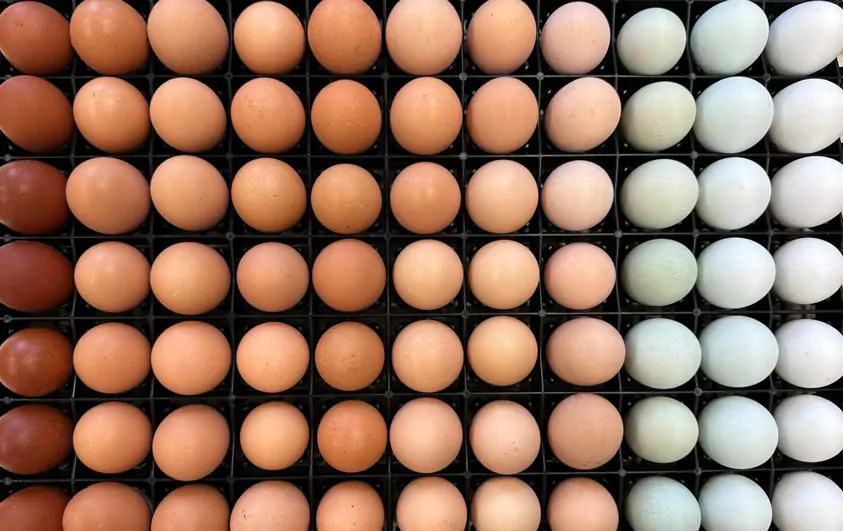
Eggshell color is one of the most visible characteristics of an egg and an important criterion for consumers. From pure white to dark brown, and including blue or green, this diversity of colors fascinates both consumers and professionals in the poultry industry.
In this article, we will explain how this wide range of colors is formed through a complex biological process, where the eggshell is gradually built and pigments are deposited at specific stages of oogenesis.
Eggshell Formation: A Key Step in the Oviduct
Egg formation is a complex physiological process that takes place in the hen’s reproductive system, specifically in the oviduct, and lasts approximately 24 hours. After ovulation, the yolk travels through the different sections of the oviduct, where the egg white (albumen), eggshell membranes, and finally, the shell are formed sequentially.
The shell is formed in the last section of the oviduct, called the uterus or shell gland. It is at this stage that calcium carbonate is gradually deposited, creating the mineral structure of the shell.
Coloration occurs at the end of this stage. Pigments are secreted by the cells lining the uterus and deposited on the surface of the shell during the final hours before laying. Depending on the type and amount of pigments produced, the egg will have a white, brown, blue, or green shell.
Pigments Responsible for Egg Color
Eggshell color primarily results from the presence and combination of two pigments: protoporphyrin and biliverdin.
- Brown Eggs: Protoporphyrin
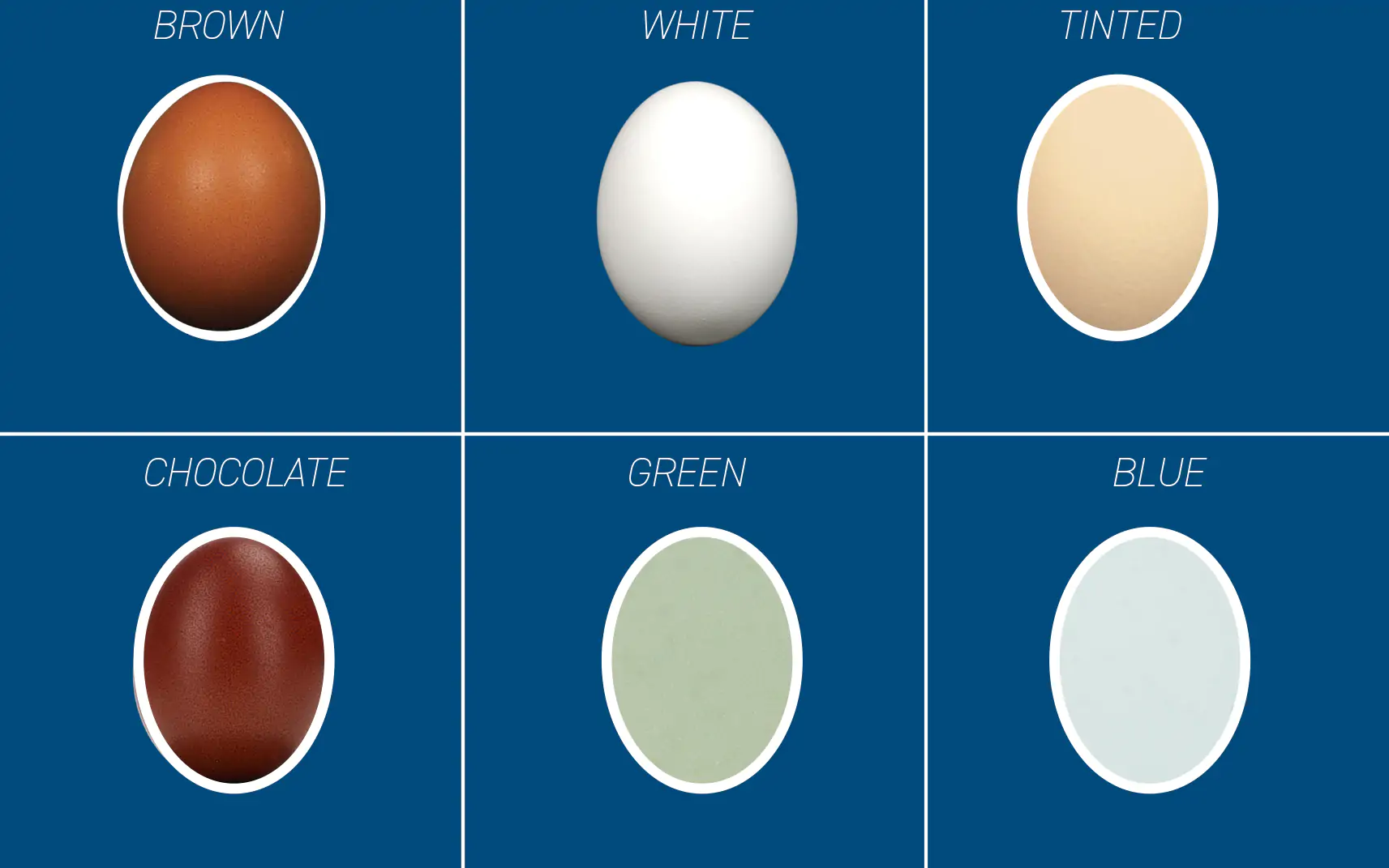
Brown coloration mainly comes from protoporphyrin, a pigment derived from hemoglobin. It is deposited on the surface of the shell during the final stage of formation. The intensity of the brown color depends on the combined action of several genes, which causes significant variation among breeds and explains the range of shades observed, from light beige to dark brown.
Well-known brown egg-laying breeds include Rhode Island Red, Plymouth Rock, Sussex, and Marans, famous for their very dark “chocolate” brown eggs. - Blue and Green Eggs: Biliverdin
Some breeds, such as the Araucana, carry a gene responsible for the production and deposition of biliverdin, which results in blue and green eggs. Unlike protoporphyrin, this pigment is incorporated throughout the thickness of the shell, making the coloration visible both inside and outside the egg. - White Eggs: Absence of Pigments
White eggs are simply shells without pigments. Their mineral structure is identical to that of other eggs. The absence of pigment deposition explains their color. The most representative breed for white eggs is the Leghorn, widely used in large-scale production systems worldwide.
Color Diversity Serving the Market
Eggshell color is a key differentiating factor in the egg market. Consumer preferences vary greatly across regions and distribution channels: some countries favor brown eggs, others prefer white eggs, while specific markets value colored eggs, particularly blue or green.
In this context, NOVOGEN selects and markets different lines of laying hens tailored to market needs:
- Conventional white egg lines: NOVOgen White Classic, NOVOgen White Light, NOVOgen White UltraLight
- Conventional brown egg lines: NOVOgen Brown Classic, NOVOgen Brown Light
- Premium brown egg lines with specific phenotypes: Color Sussex, Color Sussex Medium, Color Barred Black, Color Grey Barred, Color Grey Barred Medium, Color Black, Color Ash, Color Black Tail
- Premium lines for blue, green, or chocolate eggs: Color Blue, Color Green, Color Chocolate
Eggshell Color: An Important Genetic Trait
Eggshell color is largely determined by the hen’s genetics, but other factors can influence its intensity and quality, including diet, age, environment, and flock health status.
During the laying cycle, shell color intensity naturally decreases while hens get older. One of the objectives of genetic selection is to limit this natural decline, and maintain shell color as uniform as possible within a flock.
In our next article, we will explain in more detail how shell color is measured and incorporated into our breeding program to ensure high-performing products adapted to different markets.